When to plant paulownia?
When to plant paulownia? The technical guide to a successful planting
Understanding paulownia’s climate needs
Whether you choose a hybrid such as Shan Tong or Paulownia elongata, the tree needs specific conditions to break dormancy and start photosynthesis. Unlike native species (oak, beech) that can be planted all winter, paulownia dislikes cold, waterlogged soil when it starts growing.
The 2 key signals that tell you when to plant:
- Soil temperature: it should reach a daily average of 8 to 15 °C. Below that, the roots stay inactive and may rot.
- Light: the tree needs at least 6 hours of direct sunlight a day. It is a full-sun species.
Option 1: spring planting (recommended)
This is the ideal period for most of France and similar temperate climates, especially for potted plants and young shoots.
Why spring?
Planting between April and June (depending on your region) puts the tree into warm soil. Wait until the risk of late frost has passed (mid-May in northern France). The roots can then colonise the soil quickly before the summer heat.
Expert tip: if you plant in May, plan regular watering to help the young tree through its first summer.
Option 2: autumn planting (bare roots only)
Autumn planting (October–November) is reserved for dormant bare-root plants or root cuttings (“stumps”).
The goal is different: getting the root into the ground before the frost so that it settles in. Beware of heavy clay or soil that stays waterlogged in winter: paulownia cannot stand root asphyxia. If your land is very wet in winter, always prefer spring planting.
The Agribiomix tip: gain time by pre-growing indoors
Your plants arrived early in the season (March) but it is still freezing outside? Do not put them in the ground straight away.
The repotting technique:
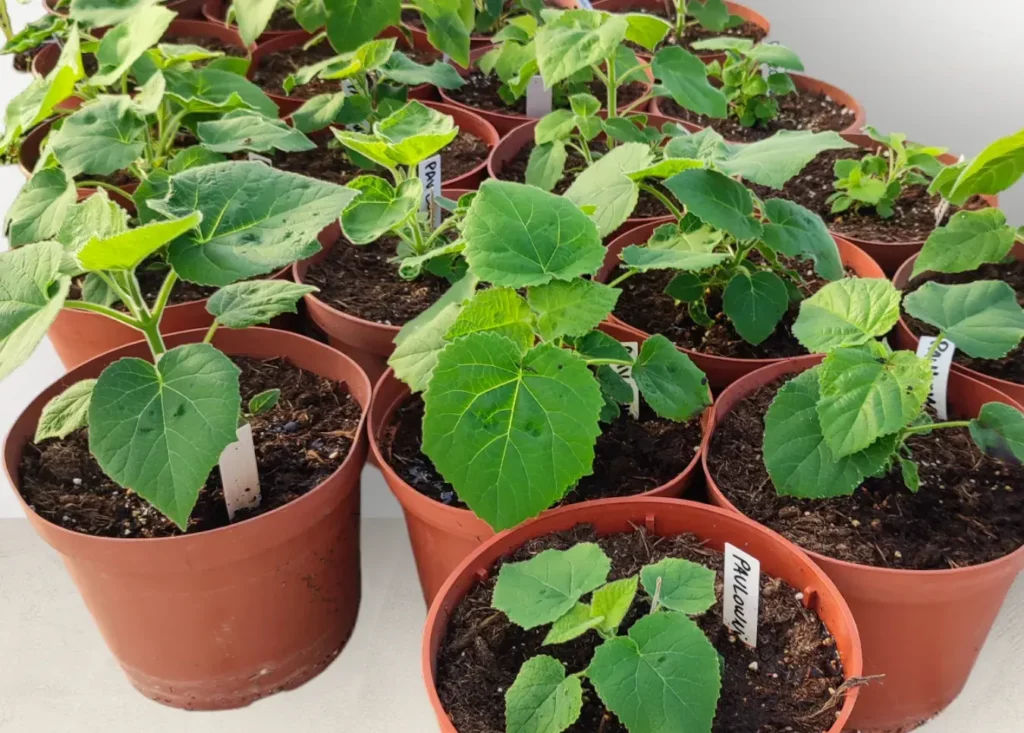
- Repot the young plants into larger pots (2–3 litres).
- Place them in a greenhouse, a conservatory or behind a sunny window.
- Keep the compost moist without drowning it.
This wakes the tree up and gains 3 to 4 weeks of growth. When you plant it out in May, it will already be vigorous and will race towards the light sooner, maximising biomass production in the first year.
Aftercare
Planting at the right time is not everything. To make sure the tree survives and grows well:
- Watering: essential for the first 3 months. The soil must stay moist.
- Weeding: paulownia does not tolerate weed competition at the start. Keep the base of the tree clear (mulching recommended, for example with miscanthus).
Ready to start your planting project?
Browse our selected, certified hybrids (Shan Tong, Elongata, Tomentosa), suited to temperate climates.
See the paulownia plants