
Agribiomix nursery · northern France
Poplar: growing, planting and hybrid poplar plants
Timber, short rotation coppice for energy or windbreak: poplar is one of the fastest-growing trees in temperate climates. Here is how to choose it, plant it and manage it.
- 2.5 to 3 mof growth per year for the H275 hybrid poplar, even in poor soil
- 3,000 to 4,000plants per hectare in short rotation coppice
- 7 × 7 mthe classic spacing of a poplar plantation for timber
- April–Maythe best planting period, in warm soil
Poplar, a fast-growing, light-loving tree
Poplar (Populus) is a light-demanding tree that likes deep, moist soils with a good water supply: valley floors, riverbanks, healthy farmland. Cultivated poplars are mostly hybrids, selected for vigour, straight growth and disease resistance.
Its pale, light wood is peeled into veneer (plywood, light packaging such as fruit crates), sawn, or chipped and pelleted for energy. France is Europe’s leading poplar producer.
- Growth: among the fastest of temperate trees.
- Coppicing: once cut, it regrows from the stump the following year, allowing several harvests without replanting.
- Needs: water and light; it copes badly with weed competition at the start.

Three ways to grow poplar
7 × 7 m
Poplar plantation for timber
About 200 trees per hectare, pruned to form 7 to 14 m logs, sold for veneer or sawing. The cycle is counted in years, usually 15 to 20 depending on the soil.
3,000 to 4,000 plants/ha
Short rotation coppice
A dense planting, cut every few years to produce wood fuel (chips, pellets). The stumps regrow after each cut. The difference between short and very short rotation: SRC compared.
1 row
Windbreak
A row of poplars quickly shelters crops, buildings or livestock from the wind, and can eventually supply firewood.
Planting poplar: the method
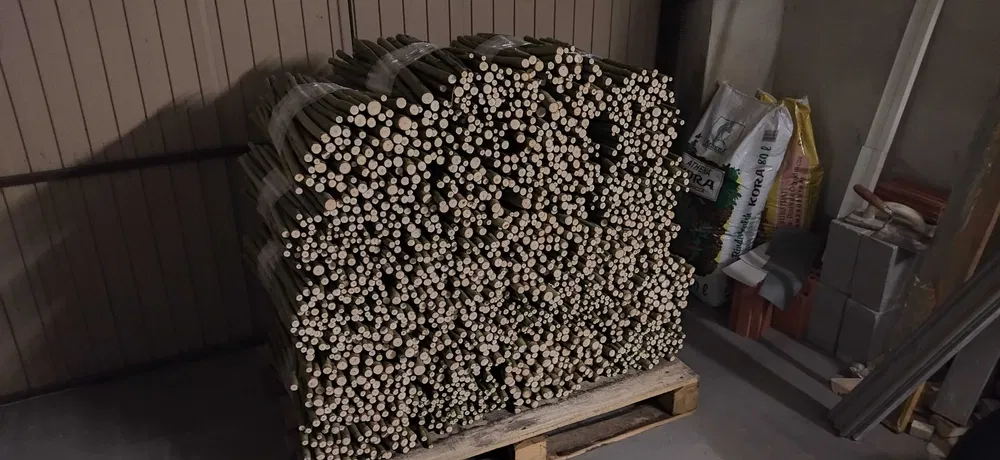
Plant in April or May, in warm soil: the plants take more vigorously and a young poplar can reach 3 m by September. Our plants are kept in cold storage until shipping, which keeps them dormant until the right moment.
- Prepare the plants: soak them in water for a week, changing the water every day, at outdoor temperature (ideally 10 to 20 °C). This prepares the roots before planting.
- Work the soil: deep ploughing, then a cultivator pass to refine it. On fallow land or grassland, plough earlier so that the organic matter can break down.
- Respect the density: in coppice, 1.6 to 2.5 m between rows and 0.4 to 0.8 m along the row. The lower the density, the longer you can wait between cuts.
Care, harvest and regulations
- Weeding: essential for the first two years, until the trees outgrow the weeds.
- Stem selection: one or two years after a cut, keep only one stem per stump (two in wet soil).
- Harvest: cut trunks regrow from the stump the following year, so the coppice can be harvested several times.
- Farm subsidies: in France, short rotation coppice must be cut within a maximum period (8 years under the rules applied so far) to keep EU CAP payments. Check the rules in force with your local agricultural authority before planting.
Our plants and services
H275 hybrid poplar
Batch of 100 plants with plant-health guarantee, for coppice, timber plantation or windbreak.
See the plants →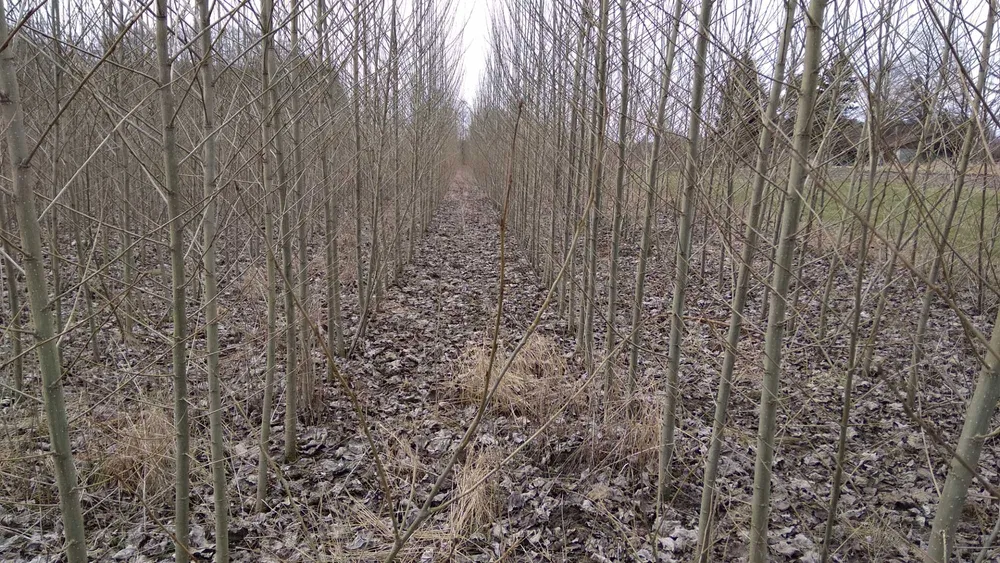
Compare the crops
Poplar, willow, miscanthus, paulownia, bamboo, silphia: yields, outlets and constraints side by side.
Compare →
Planting support
Planting plan, density suited to the outlet and use of our planting machine.
Poplar growing guide
Frequently asked questions about poplar
How fast does a poplar grow?
A hybrid poplar such as H275 grows 2.5 to 3 m a year in good conditions, even in poor soil, without irrigation or fertiliser.
When should poplar be planted?
In April or May, in warm soil. Plants kept dormant until then take better than winter plantings.
How many poplars per hectare?
About 200 for timber (7 × 7 m), 3,000 to 4,000 for short rotation coppice grown for energy.
How far from a house should a poplar be planted?
Its roots are strong and seek water: keep a good distance from foundations, pipes and drains, especially in clay soil. For a project near buildings, ask us for advice.
Poplar or paulownia?
Poplar is proven, suited to moist soils and well valued for veneer or energy. Paulownia also grows very fast and gives a more sought-after wood, but it dislikes waterlogged soil in winter. The choice depends mainly on the soil and the outlet.
Planning a poplar plantation or coppice?
Tell us the area, the soil and the target outlet: we will suggest the density and the number of plants.