Growth of paulownia in France: limiting factors and realistic expectations
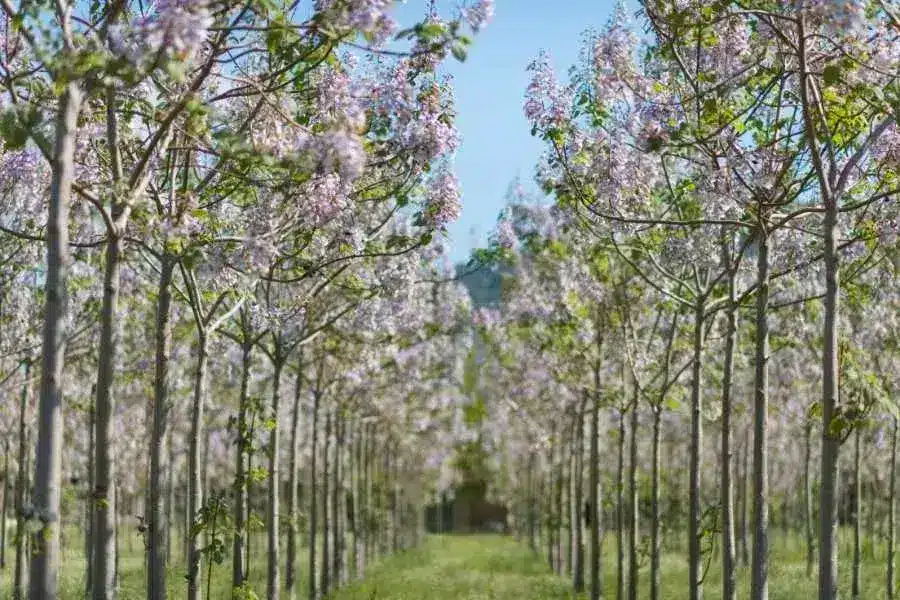
Paulownia growth in France: limiting factors and realistic expectations
The growth rate of paulownia depends less on promises than on the plot and on how it is managed. In France, two neighbouring plantations can give two opposite results. This page sets out concrete benchmarks: what speeds growth up, what holds it back, and what it is reasonable to expect over 24 months.
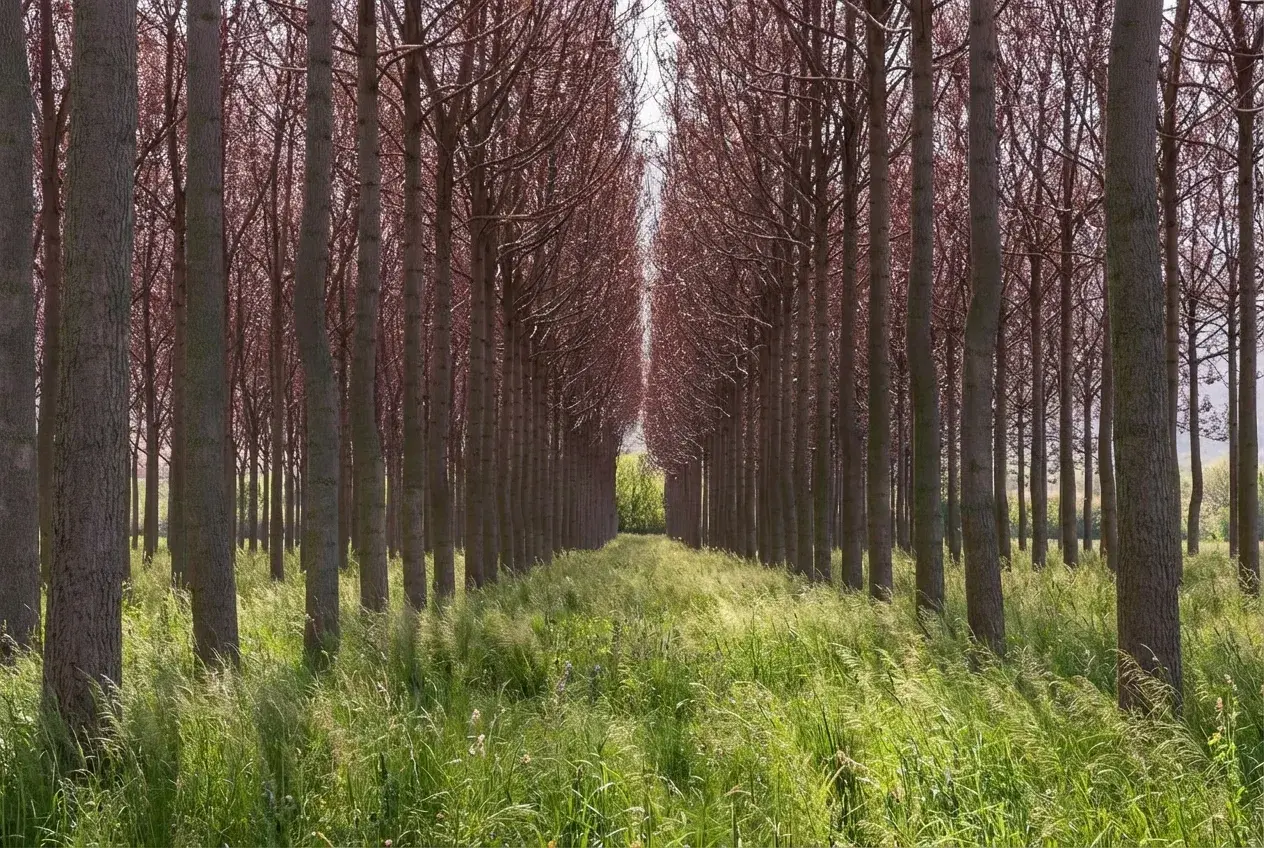
1) What you need to understand about paulownia growth
Growth (height + diameter) depends on a trio: useful heat, available water, well-drained soil. If just one is missing, the tree “plateaus”, even with good planting material.
Paulownia is demanding at the start: late frost, wind, grass competition and water stress have an immediate cost. A plantation that is monitored is a plantation that moves forward.
In France, the same technical itinerary gives different results depending on microclimate, available water capacity and bearing capacity. You need to think in terms of scenarios, not a “single figure”.
2) The limiting factors that explain 80% of the differences
Water: the no. 1 factor in paulownia growth
Paulownia growth drops as soon as the available water reserve is insufficient, or when establishment watering is missing. The typical symptom: growth in “fits and starts”, shrinking leaves, soft wood, then a halt during dry periods.
Soil: drainage, bearing capacity, oxygen
Waterlogged and compacted soils penalise growth quickly. Paulownia does not like “having its feet in water”. The diagnosis is often simple: cold area, sticky soil, signs of surface crusting, shallow roots.
Late frost and wind: invisible damage
Late frost can reset growth to zero on a young tree. Wind dries out, breaks, and worsens water stress. Result: less biomass, less height, and delayed diameter growth.
| Factor | Field signs | Impact on growth | Priority lever | Simple check |
|---|---|---|---|---|
| Water stress | Small leaves, wilting, growth halt | Clear halt + lower diameter | Establishment watering / available water reserve | Soil profile + moisture at 20–40 cm |
| Waterlogging / saturation | Yellowing, slow growth, shallow roots | Poor establishment + mortality | Drainage / choice of area | Spade test + smell + structure |
| Grass competition | Tree “drowned” in vegetation, dense cover | Cumulative delay | Protection / clean weeding | Visual gap across 2 rows |
| Late frost | Blackening, scorched buds | Growth reset “to zero” | Choice of exposure + protection | Frost history + low points |
| Drying wind | Damaged leaves, flattened stem | Less biomass | Windbreak / staking | Prevailing wind + signs |
3) Realistic expectations: thinking in scenarios (France)
It is more professional to speak in terms of scenarios, with explicit conditions. The orders of magnitude below concern growth over the first two years (height/diameter), where the differences widen.
| Scenario | Conditions | Typical result | Risk | Decision |
|---|---|---|---|---|
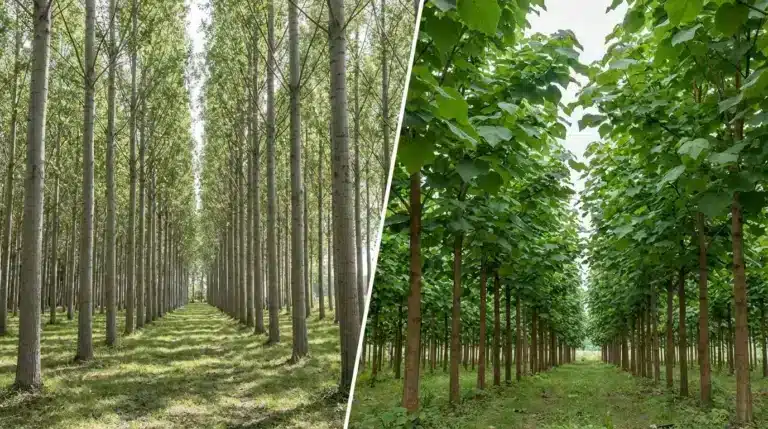
| Favourable | Deep, well-drained soil, access to water, little wind, regular monitoring | Sustained growth, uniform rows, good start in diameter | Moderate | Standard management + monitoring of edges |
| Average | Adequate soil but limited available water, competition to be controlled, wind present | Uneven growth, adjustments needed (water/tree base/protection) | High | Correct quickly or accept a lasting delay |
| Unfavourable | Waterlogging/compaction, cold low-lying ground, no water, drying wind | Slow establishment, possible mortality, “capped” growth | Very high | Move the plantation or change species |
4) Monitoring: 6 simple indicators to track growth
Need to secure growth on your plot?
For planting projects, we recommend a short discussion on soil, water, exposure and objective (timber, agroforestry, biomass). You save time, and you avoid the unfavourable scenarios.
One-year-old bare root. A format often chosen when the aim is to get established quickly.
Shan Tong bare root (1 year) →Paulownia Elongata plants. For structured projects with management and monitoring.
Paulownia Elongata plants →Frequently asked questions
What is paulownia growth in the first year in France?
There is no single figure. Growth depends mainly on available water, soil drainage, late frost and monitoring. A favourable plot can progress quickly. A limiting plot plateaus, even with good planting material.
Why is diameter more important than height?
In timber production, value is built on the log: straightness, defects and diameter. Great height without diameter is not a good indicator of value.
How to avoid “saw-tooth” growth?
It is almost always linked to water and soil: water stress, waterlogging, competition at the tree base. The priority is to secure the available water reserve and maintain regular management.