
Agribiomix nursery · northern France
Biomass crops: which one suits your field?
Miscanthus, cup plant, willow, basket willow, poplar, paulownia, bamboo, giant reed: ten crops and uses compared on the same criteria, with sourced figures. Set your goal, your soil and your constraints, and the ranking updates before your eyes.
- 10crops and uses compared on the same criteria
- Year 2first harvest of miscanthus, cup plant and giant reed
- 20 to 25 yearsof harvests from the same field for miscanthus, without replanting
- 13 to 20 tof dry matter per hectare per year from an established miscanthus crop
Find the right crop for your project
Choose one or more goals, your soil type and your constraints. Each crop gets a score out of 100: 60 % for your goals, 20 % for ease of establishment, 20 % for low fertiliser and crop protection needs. A crop that does not fit moves to the back, with the reason.
10 crops compared.
-
1
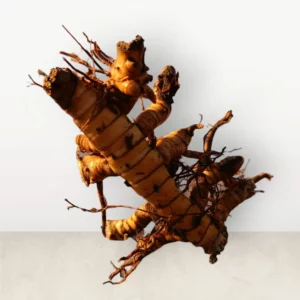
13-20 t DM/ha/yr · first harvest yr 2–3 · 20–25 years
70/100 -
2
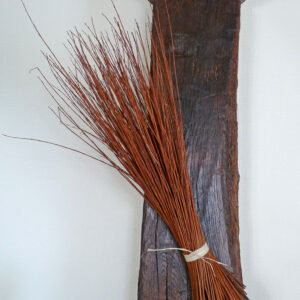
7-12 t of green rods/ha/yr · first harvest yr 3 · 30 years or more
70/100 -
3
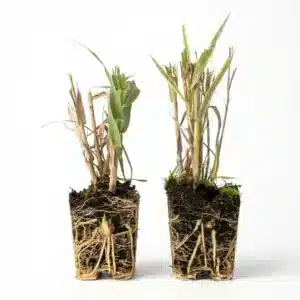
6-25 t DM/ha/yr · first harvest yr 2–3 · 30 years or more
67/100 -
4
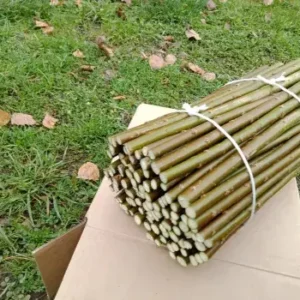
3-12 t DM/ha/yr · first harvest yr 3–4 · 30 years or more
63/100 -
5

10-18 m³ of timber/ha/yr · first harvest yr 15–21 · 15–21 years
63/100 -
6
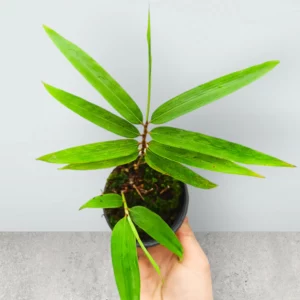
Running bamboo (Phyllostachys)
10-30 t DM/ha/yr · first harvest yr 4–8 · 30 years or more
60/100 -
7
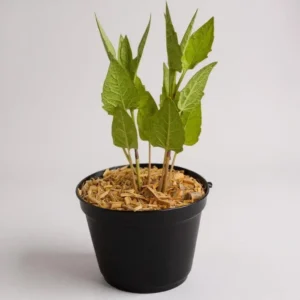
6-16 t DM/ha/yr · first harvest yr 2 · 10–20 years
57/100 -
8
1.5-12 t DM/ha/yr · first harvest yr 3–8 · 30 years or more
57/100 -
9
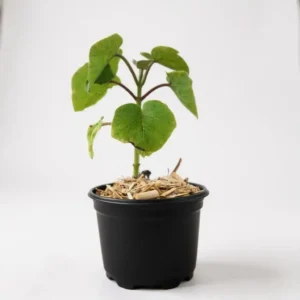
timber in m³, recut 4-5 times · first harvest yr 7–10 · 30 years or more
47/100 -
10
hedge, not harvested · no harvest · 30 years or more
40/100
Dry matter yield
Tonnes of dry matter per hectare per year, once established. Timber and basket willow are measured differently: no bar.
From first harvest to end of crop
Years after planting, from 0 to 30 or more.
To simulate a complete project, from crop to market and logistics, use our Cropfinder app.
How to choose a biomass crop
1. The market
Find the buyer before planting
We recommend securing the outlet before planting: heating plant, biogas plant, livestock farmer for bedding, landscaper, basket maker. A perennial crop ties up the field for 10 to 25 years.
2. Soil and water
Put the crop on the right soil
On wet soil, willow is the safest crop. On dry or light soil, none of these crops reaches its full yield: miscanthus needs 500 to 600 mm of rain from April to November, cup plant at least 600 mm a year.
3. Timing
Count the years
First harvest in year 2 for miscanthus and cup plant, in year 3 or 4 for willow, after 15 to 21 years for a poplar plantation. Check the length of your lease: miscanthus stays for 20 to 25 years.
4. Machinery
Harvest with what you have
Miscanthus and cup plant are harvested with a standard forage harvester or baler. Willow or poplar coppice needs a specialised cutter; basket willow and bamboo are mostly harvested by hand.
The crops at a glance
13-20 t DM/ha/yr
Giant miscanthus
A sterile hybrid that does not self-seed. Planted once for 20 to 25 years and harvested every late winter from the 2nd or 3rd year with standard machinery: boiler fuel, bedding, mulch, windbreak hedge.
Growing miscanthus →6-16 t DM/ha/yr
Cup plant
A sown perennial, harvested with a forage harvester from the 2nd year for biogas: between 50 and 80 % of the methane per hectare of maize, with no tillage for 10 to 20 years. Its flowers feed bees in late summer.
Growing cup plant →3-12 t DM/ha/yr
Willow and basket willow
The crop for wet soils. As coppice, willow is cut every 3 to 4 years for wood chips; as an osier bed, it is harvested every winter from the 3rd season for basketry, between 7 and 12 t of green rods per hectare.
Basket willow →15-21 years
Poplar
As a plantation, timber for plywood and packaging in 15 to 21 years on moist soil; as coppice, wood chips from 3 to 8 years. Poplar withstands very cold winters.
Growing poplar →7-10 years
Paulownia
A fast-growing tree with light timber for joinery, plywood and packaging. Recut 4 to 5 times after the first harvest, it needs free-draining soil.
Growing paulownia →10-30 t DM/ha/yr
Bamboo
Evergreen hedge and biomass. Running bamboo (Phyllostachys) is planted with a rhizome barrier; clumping bamboo (Fargesia) suits gardens. First cane harvest after 4 to 8 years.
Growing bamboo →6-25 t DM/ha/yr
Giant reed
Very productive in warm climates, much less so in cool ones. Harvested from the 2nd year for windbreak hedges, mulch, boiler fuel or biogas.
Growing giant reed →Frequently asked questions
Which biomass crop yields the most?
In dry matter, established miscanthus is the benchmark in France: 13 to 20 t per hectare per year. Cup plant gives 6 to 16 t. Giant reed produces more in a Mediterranean climate, much less in a cool one.
Which one can be harvested soonest?
Miscanthus, cup plant and giant reed, from the 2nd year. Willow coppice is cut from the 3rd or 4th year, then every 3 to 4 years. A poplar plantation is harvested after 15 to 21 years.
Which crop for wet soil?
Willow coppice: it likes wet soils. Cup plant and poplar tolerate them moderately; miscanthus and paulownia dislike them.
Which crop for biogas?
Cup plant: between 50 and 80 % of the methane per hectare of silage maize, harvested with the same forage harvester, with no ploughing or sowing for 10 to 20 years.
Which crops can spread beyond the field?
Giant miscanthus is sterile and does not self-seed. Running bamboo spreads through its rhizomes: we recommend a rhizome barrier. For the other crops, we set out the precautions on each crop’s page.
Can they be grown in a garden?
Basket willow, clumping bamboo (Fargesia) and miscanthus as a windbreak hedge are well suited. Running bamboo needs a rhizome barrier; poplar and paulownia grow into large trees.
Sources
Figures from INRAE, Agreste, the chambers of agriculture (Normandy, Alsace, Nouvelle-Aquitaine, Loiret), CNPF, Fibois, FCBA, the 2026 CAP instruction, EPPO, the botanical conservatories, the Bavarian institutes TFZ and LfL and scientific publications, consulted on 2 November 2026. The comparator’s 0 to 3 scores are Agribiomix’s assessment based on these figures.
A biomass crop project?
Area, soil, market: we help you choose the crop and work out how many plants you need.