How profitable is miscanthus?
Miscanthus Profitability: Economic analysis and key success factors
In an agricultural context marked by volatile cereal prices and rising input costs, Miscanthus x giganteus is establishing itself as a strategic alternative. Beyond its agronomic interest, it is its long-term economic performance (15 to 20 years) that appeals to more and more farmers.
Yet the question comes up every time: how much does a hectare of miscanthus really earn?
The answer is not a single figure, but depends on mastering three factors: the establishment cost, the dry matter yield and, above all, the way the crop is marketed.
1. The economic mechanics: Low costs, Stable margin
Unlike annual crops (wheat, maize, oilseed rape) that require a high investment every year (seed, fertiliser, plant protection products), the miscanthus model is that of a heavy initial investment, followed by almost zero operating costs.
- Year 0-1 (The investment): Buying the rhizomes and planting represent a significant cost (between €3,000 and €4,000/ha depending on density and supplier). This is the “entry ticket”.
Note: Grants (Water Agencies, Regions) can cover 40% to 80% of this amount, radically changing the return-on-investment calculation. - Year 2 to 20 (The harvest): Once the crop is established, the only costs are harvesting (chopping or baling) and transport. No chemical inputs, no nitrogen, no tillage.
Result: A semi-net margin often higher than that of a conventional rotation on average soils and, above all, decoupled from world wheat or gas prices.
2. The 3 levers of profitability
To maximise income per hectare, it is not enough to plant. You have to plan the outlet in advance.
A. Establishment quality (The risk factor)
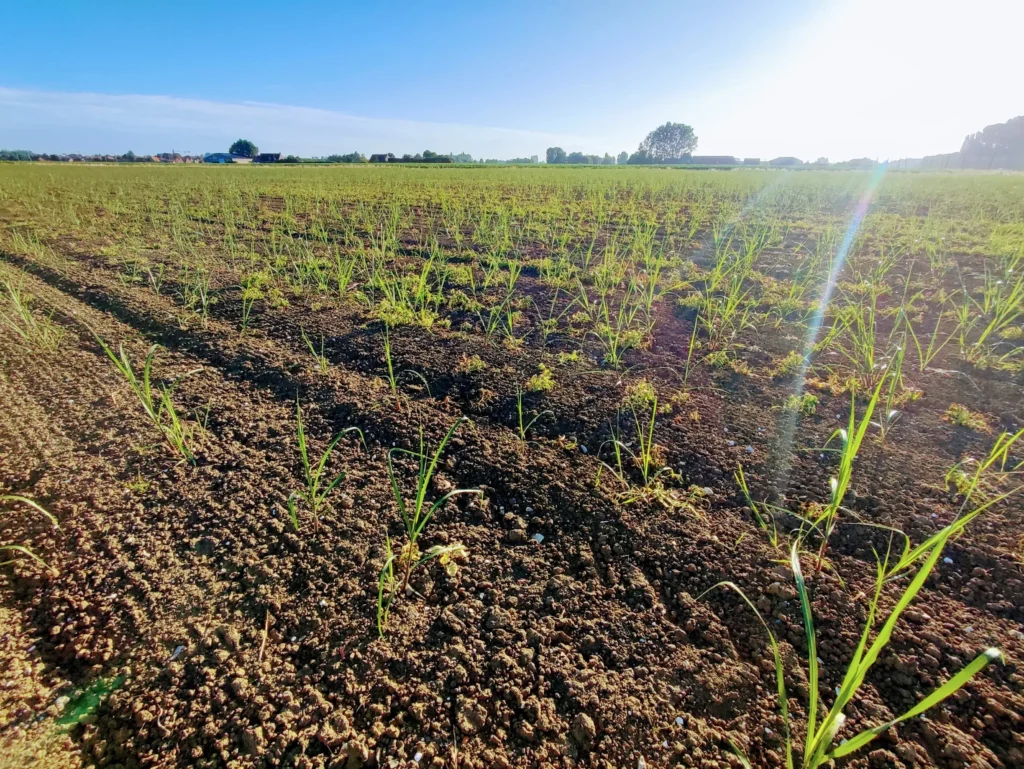
This is the critical point. A poorly established miscanthus (badly prepared soil, poor-quality or dried-out rhizomes) will never make up for lost time. An uneven stand means a yield capped at 10 or 12 tonnes of dry matter (DM) per hectare, against 15 to 20 tonnes for a successful plot.
B. Yield (The volume factor)
Yield reaches its plateau (cruising speed) in the 3rd year. It varies with rainfall and soil type, generally ranging between 13 and 20 tonnes of dry matter per hectare. It is this volume that will spread your fixed harvesting costs.
C. Marketing the crop (The price factor)
This is where the real difference in income is made. There are three levels of increasing profitability:
- Sale as raw material (Industrial biomass): Sale to a trader or an industrial boiler plant. Lowest selling price, simple logistics. Decent but moderate profitability.
- Processed local sale (Horticultural mulch / Animal bedding): By de-dusting and packaging the harvest, you reach the market of landscapers, local authorities or stables. The selling price per tonne can double compared with raw material.
- Own use (Fuel or Bedding): This is often the most profitable solution.
- Bedding: You replace cereal straw (whose price is volatile and availability uncertain) with your own, more absorbent product.
- Heating: You replace heating oil or gas. The “profitability” here is the saving made on your energy bills, which is often unbeatable.
3. Beyond the euros: Indirect profitability
An honest margin calculation must also include the “hidden” gains:
- Working time: Once established, miscanthus requires no intervention from May to March. That is time freed up for other enterprises or for marketing.
- Soil protection: Zero erosion, increased organic matter content, a refuge for biodiversity (beneficial insects, game).
- Regulatory security: An ideal crop for Non-Treatment Zones (ZNT) or Water Catchment Areas (AAC), making it possible to put otherwise constrained land to productive use.
Simulate your project
Every farm is unique. Your soil type, your eligibility for Water Agency grants and your marketing strategy completely change the economic equation.
We have developed a precise tool to help you see things clearly. In a few clicks, estimate your establishment costs, your potential grants and your forecast annual margin.
Access the profitability simulator