Paulownia firewood: profitable or a bad idea?
for main heating, paulownia is rarely the most appropriate choice. On the other hand, it can be used as a back-up, for lighting, or to make the most of off-cuts (thinnings, branches).

Paulownia as firewood: profitable or a bad idea?
Direct answer: as a main heating fuel, paulownia is rarely the most appropriate choice. However, as a supplement, for lighting fires, or to make use of offcuts (thinnings, branches), it can be useful.
The deciding factor is not the “calorific value per kilogram”.
In practice, the issue is density and therefore the energy per stere / per m³.
Result: for equivalent heat, you generally need more volume than with a dense hardwood (oak, beech).
The key point: energy per kg vs energy per m³
There is often confusion between two metrics: energy per kilogram and energy per volume (cubic metre/stere). For domestic heating, it is volume that governs reality: storage, handling, refuelling frequency, comfort.
1) Energy per kilogram
For comparably dry wood, many species fall within similar orders of magnitude “per kg”. That alone is not enough to judge the merit of a species for heating.
2) Energy per cubic metre (or per stere)
Paulownia is a low-density wood. For equal volume, there is less material, and therefore less energy available. This is the main reason why it “lasts” less time on the fire than a dense hardwood.
| Species (dry wood) | Density (trend) | Energy per m³ (order of magnitude) | Practical observation |
|---|---|---|---|
| Paulownia | Low | ≈ 1,200 – 1,600 kWh/m³ | Rapid temperature rise, more frequent refuelling. |
| Oak / Beech | High | ≈ 3,000 – 4,200 kWh/m³ | Holds the fire well, longer-lasting embers, less volume to handle. |
Burning behaviour: quick flare-up, shorter-lived embers
Paulownia is characterised by lively combustion: it “catches” easily and heats up quickly. In return, the embers tend to be less durable than with dense hardwoods.
Key points
- Well suited: lighting fires, supplementary heating, shoulder seasons.
- Less suited: base heating (need for long burn, overnight, large volumes).
When it can be profitable
1) Making use of by-products
In a management system geared to timber / biomaterials, thinnings, branches and offcuts can be used for heating. The point is not to “make kWh per stere”, but to reduce losses and turn a residue into something useful.
2) “Starter” use and supplementary heating
For starting a fire or giving a quick burst of heat, paulownia is handy. This improves comfort without making it the core of the supply.
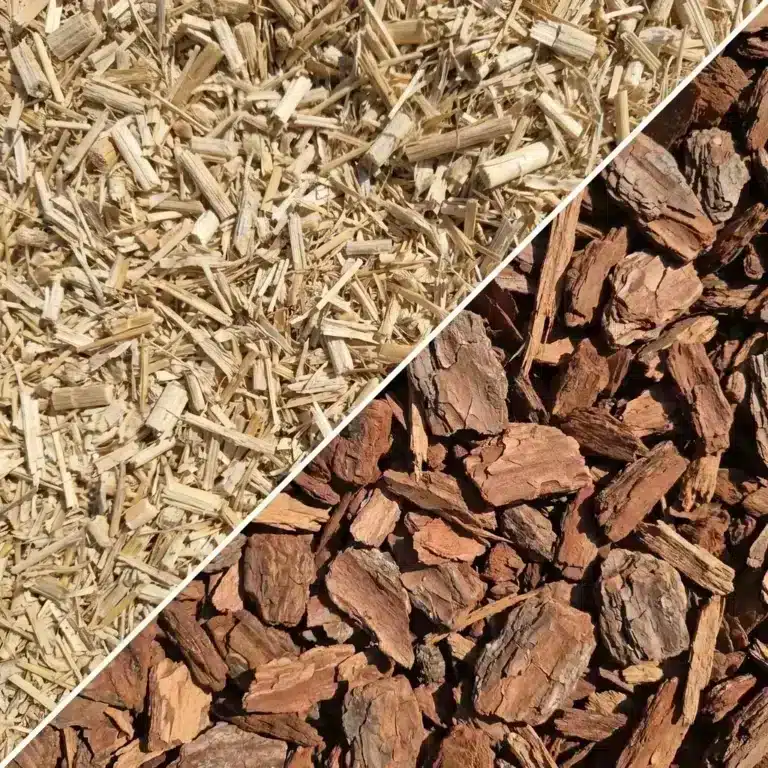
3) Densification and the wood-chip supply chain
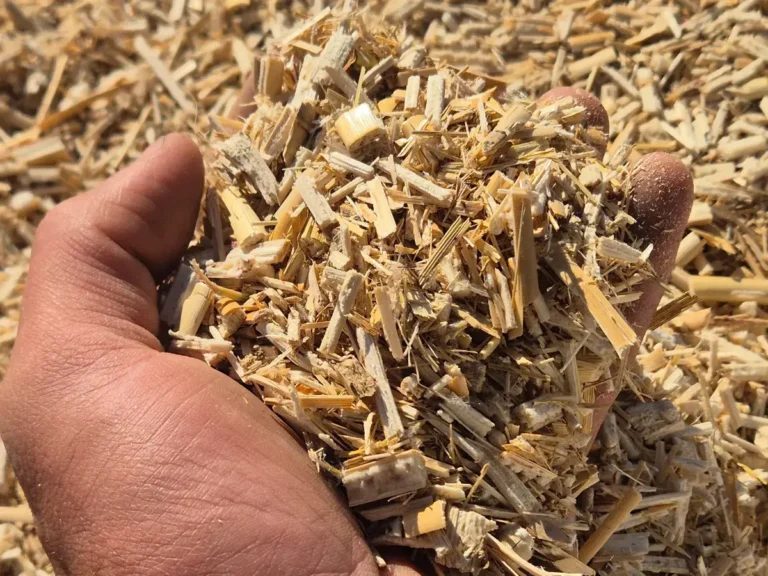
Well-dried wood chip can improve logistics (regular feeding, controlled storage). However, this generally involves organisation and costs: chipping, drying, storage, handling. The value has to be judged case by case.
Checklist before investing in equipment / getting organised
Moisture
For decent performance, aim for sufficiently dry wood. Wood that is too wet severely reduces efficiency, whatever the species.
Volume & storage
With a light wood, the storage required increases. Available space, handling and frequency of deliveries become decisive.
Appliance
In a stove/insert, burn duration matters a great deal. In a boiler (logs/wood chips), the benefit depends on the regularity of feeding and on the supply chain.
Objective
Do you want to maximise kWh per stere, or make use of an available resource (offcuts/thinnings)? The strategy changes.
Alternatives depending on the objective (heating vs utilisation)
If the aim is to produce as much heat as possible per volume, dense hardwoods remain the benchmark. If the aim is to make the most of a pathway geared to biomaterials / timber, heating becomes a relevant secondary outlet (residues, offcuts, thinnings), without being the core of the model.
Our plants: 2 varieties available
FAQ
Is paulownia a good firewood?
It is useful as a supplement and for lighting fires. As a main heating fuel, its low density means more volume to store and a less favourable burn duration than a dense hardwood.
Why does it “give less heat per stere”?
Because the energy available for a given volume depends heavily on density. A light wood contains less material per m³. For the same heat, more volume is therefore needed.
Logs or wood chips: which to favour?
Logs remain simple for occasional use. Wood chip can be worthwhile if supply, drying and storage are under control, with a supply-chain and organisational approach.
Can heating be a coherent outlet in a paulownia plantation?
Yes, as a secondary outlet: making use of offcuts, branches, thinnings. For energy performance per stere, it is generally preferable to direct the main supply towards denser species.
Going further: see the guidance on wood heating (ADEME).