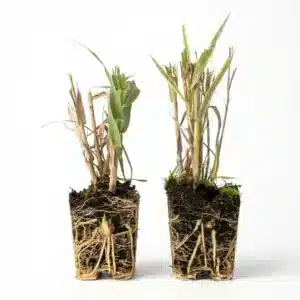
Arundo Donax
Arundo donax (Cane de Provence): A versatile, non-tracing biomass
Arundo donax is a perennial herbaceous plant with very fast growth. As a result, it is a major biomass crop. In addition, this giant grass visually resembles bamboo. However, it has a tufted root system, i.e. non-creeping. Thus, this characteristic facilitates its integration on agricultural plots. You avoid the risk of underground proliferation, which is so common in bamboo.
A resilient culture for the South of France
Arundo donax adapts perfectly to the pedoclimatic conditions of the South of France. Indeed, its agronomic advantages make it a crop of the future in the face of climate change:
Water and thermal tolerance: the plant is extremely resistant to summer drought and high temperatures.
Hardiness: it grows easily on marginal or infertile soils.
Yield: it produces an abundant and regular biomass from the first years after planting.
Ways of adding value to the harvest
Its stems have a robust structure and a high fibre content. As a result, the harvest meets multiple agricultural and industrial needs:
Plant mulch: the shredded wood forms a long-lasting mulch. Then, it maintains the moisture of the soil and slows down the development of weeds.
Animal bedding: Arundo donax shredded has a high absorption capacity. Thus, it offers healthy and comfortable bedding for farms.
Combustion and energy: the plant has a high calorific value. Farmers therefore produce chips for biomass boilers.
Biomaterials: The green building industry uses these fibres to make insulation panels. They are also used to make biodegradable packaging.
Crafts and landscaping: Craftsmen use whole stubble for its great flexibility. Finally, they shape instrument reeds, agricultural stakes or palisades.
Showing the single result